
Available 22 November 2026 from Palgrave Macmillan
Modernity Did Not End Religion. It Reorganised It.
A groundbreaking sociological study of how spirituality, belief, authority, and meaning are being reconstructed in an age of uncertainty, technology, and digital culture.
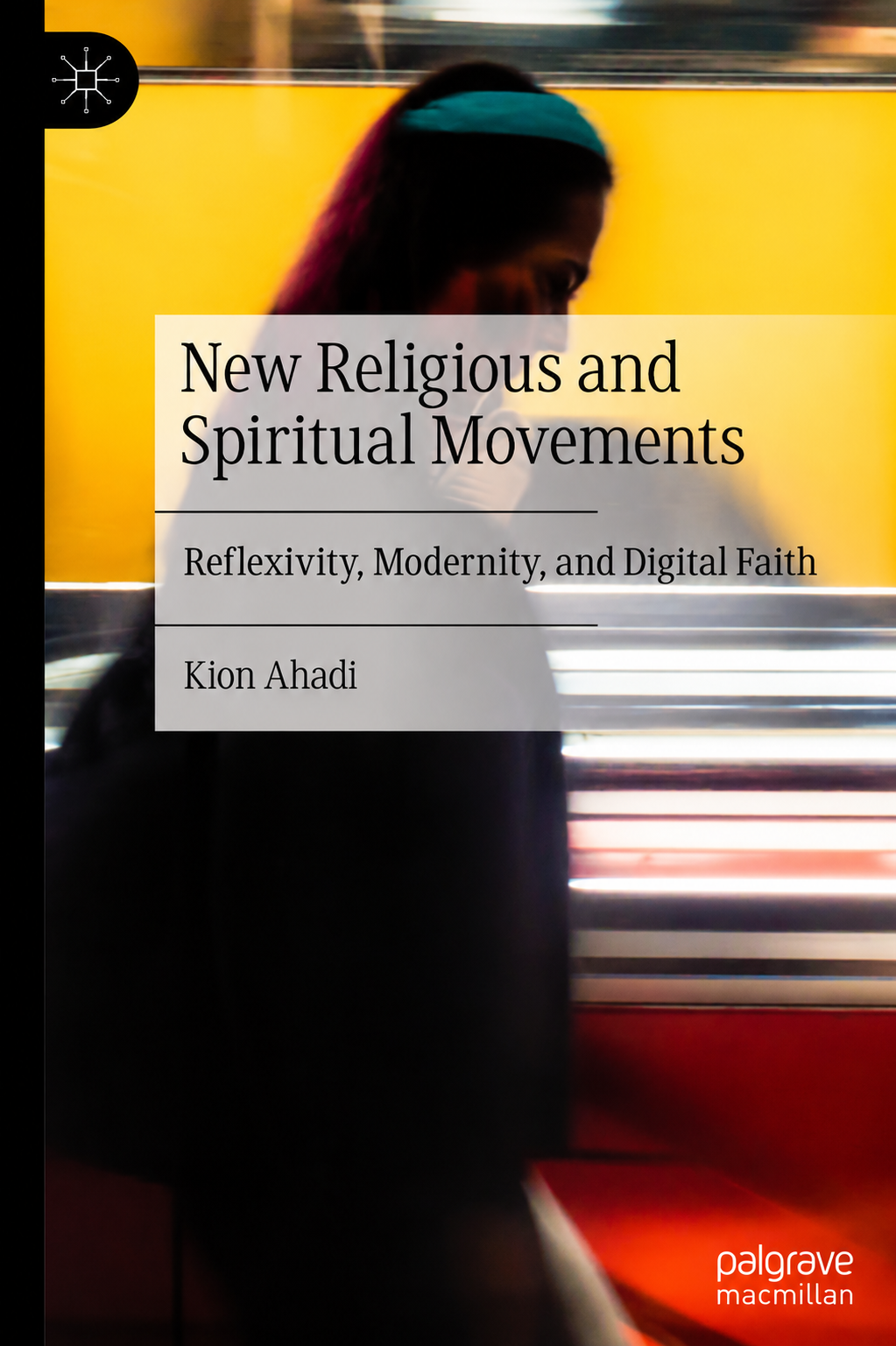
New Religious and Spiritual Movements
Reflexivity, Modernity, and Digital Faith
Dr Kion Ahadi
About the Book
Why This Book Matters
For more than a century, classical and mid-twentieth-century sociologists predicted that modernity would erode religion - the secularisation thesis associated with figures such as Max Weber, Bryan Wilson, and (in his earlier work) Peter Berger. Yet belief and spiritual practice persist and proliferate.
From Scientology and Falun Gong to UFO religions, wellness and holistic spirituality, and the digital terrain of WitchTok, Instagram shamans, and AI oracles, contemporary belief systems continue to evolve rather than disappear.
This book challenges classical secularisation theory and argues that modernity does not eliminate meaning - it reorganises it. Drawing on ESRC-funded doctoral research developed over two decades, it combines a longitudinal interview corpus, participant observation, and digital ethnography to present New Religious and Spiritual Movements as powerful indicators of how people construct identity, purpose, community, and transcendence in the modern world.
The Central Thesis
“Modernity does not secularise meaning. It reorganises it.”
The book develops an original theoretical framework the author terms reflexive realism, and an original origins–orientations typology for classifying movements - tools that reveal how New Religious and Spiritual Movements illuminate wider transformations across modern life.
Reflexive Realism
An original theoretical framework synthesising critical realism (Bhaskar) with Margaret Archer's account of reflexivity.
Origins–Orientations Typology
An original typology for classifying movements by where they come from and how they orient adherents toward the world.
A Wider Diagnosis
Shows how movements illuminate transformations in authority, identity, belief, community, knowledge, technology, and human meaning.
Explore the argument in the free 21-page sample.
Inside the Book
What You'll Discover
Part I
Rethinking Religion and Modernity
Setting the Scene
Why secularisation theory struggles to explain contemporary spirituality.
The Secularisation Debate Reconsidered
Revisiting classical theory in light of persistent belief.
From Postmodernism to Reflexive Modernity
Re-theorising religion through reflexive realism.
Part II
Typologies and Social Mapping
An Origins–Orientations Typology
An original framework for classifying movements.
Why People Join
Identity, belonging, purpose, healing, and meaning.
Part III
Authority, Knowledge, and Global Traditions
Science, Knowledge, and Legitimation
How movements use scientific language to establish authority.
Tradition, Discipline, and Global Contexts
Case studies of ISKCON and Falun Gong.
Part IV
Markets, Myths, and Digital Futures
Scientology and Capitalism
The commodification of enlightenment.
UFO Religions and Post-Secular Mythologies
Heaven's Gate, the Raëlian Movement, and the Aetherius Society as modern cosmologies.
From Instagram Shamans to AI Oracles
Digital spiritualities and algorithmic faith.
Conclusion
The Future of Meaning
The Future of Meaning
How belief systems evolve in an increasingly technological world.
Featured Topics
The Field of Inquiry
Free 21-page sample
Read a Free 21-Page Sample
Explore the ideas at the heart of a major new sociological study of religion, modernity, technology and the transformation of belief.
- The full Preface — a personal and intellectual introduction
- Selected material from Chapter 1: Setting the Scene
- A contemporary extract from Chapter 10: From Instagram Shamans to AI Oracles
- An introduction to the book's central argument — modernity reorganises meaning, it does not eliminate it
Free PDF • 21 pages • Immediate access
Inside the Sample
What You'll Read
The Preface
A personal and intellectual introduction to a book more than two decades in the making.
Setting the Scene
Why New Religious and Spiritual Movements are central to understanding modernity, identity and the enduring search for meaning.
From Instagram Shamans to AI Oracles
How platforms, algorithms and artificial intelligence are transforming spiritual authority and belief.
Early Academic Praise
Endorsements
“Endorsement coming soon”
“Advance review coming soon”
“Scholarly review coming soon”
Verified, attributed endorsements will be added ahead of publication.
Publication
Available 22 November 2026
Pre-order now from Palgrave Macmillan and major retailers. Secure your copy of the book that redefines how we understand religion, spirituality, and digital faith in the modern age.
Publication date: 22 November 2026 - Palgrave Macmillan

About the Author
Dr Kion Ahadi
Dr Kion Ahadi is a sociologist, author, and technology leader whose work spans religion, spirituality, modernity, digital culture, artificial intelligence, and social transformation.
The book grows out of his ESRC-funded doctoral research at Goldsmiths, University of London, where he also taught qualitative and quantitative research methods. It combines a longitudinal interview corpus (2003–2025), participant observation, and digital ethnography with contemporary analysis of digital religion and emerging spiritual life.
Alongside his academic work, he advises organisations on AI, data strategy, governance, and digital transformation, bringing an interdisciplinary perspective to questions of belief, authority, and social change. He is a Fellow of the Royal Society of Arts.
For journalists and editors
Press Kit Downloads
Book facts, synopsis, key arguments, suggested interview themes, author biography and media contact details - in three formats. Publication 22 November 2026, Palgrave Macmillan.
Review copies, interview requests and event bookings: kionahadi@gmail.com
Get in Touch
Contact the Author
For media enquiries, speaking engagements, academic events, teaching requests, book clubs, and interview requests.